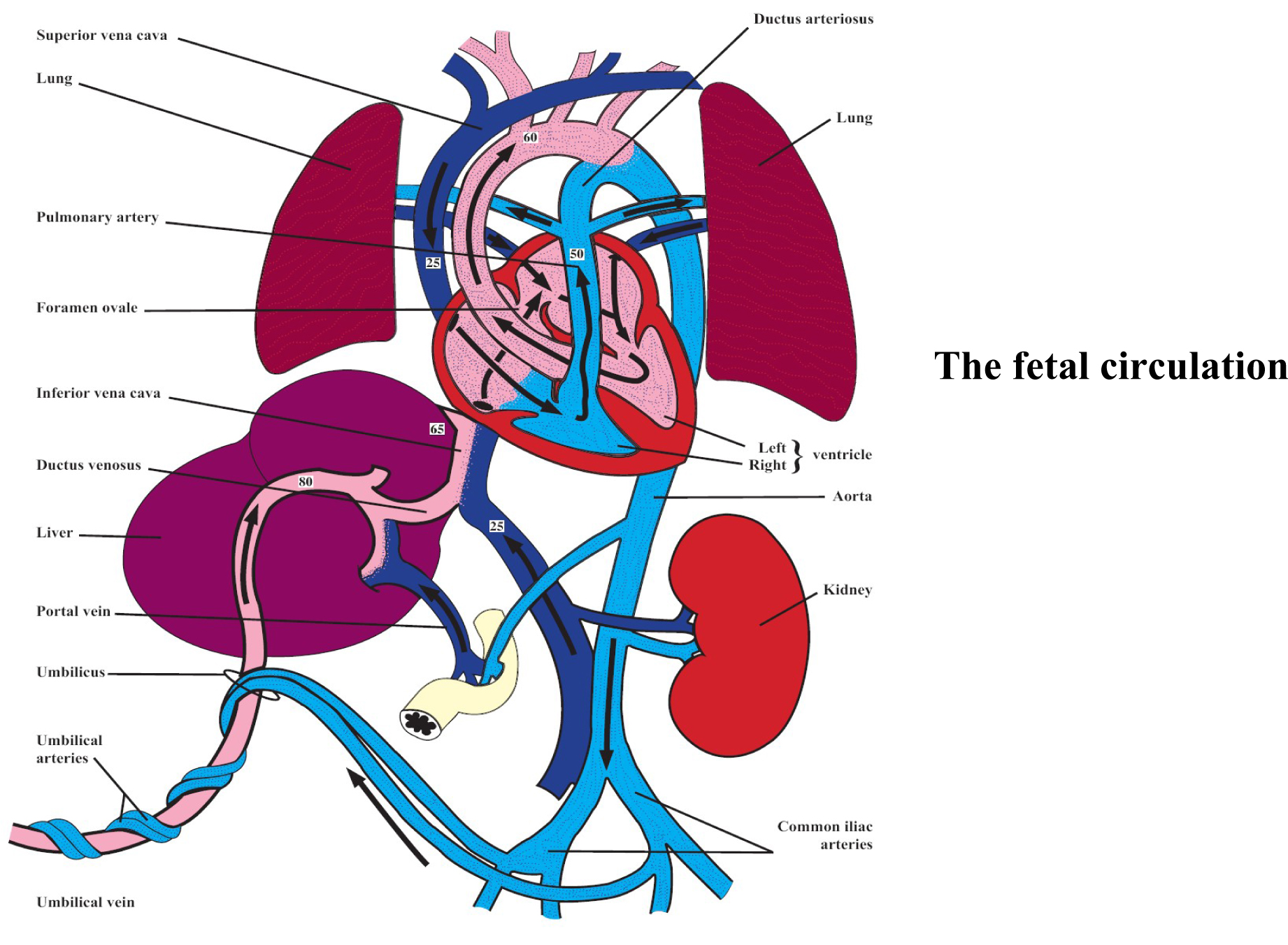
Understanding the intricacies of foetal circulation is crucial for medical students, healthcare professionals, and anyone interested in the fascinating world of prenatal development. The foetal circulation diagram serves as a visual aid to comprehend the unique circulatory system of a developing fetus. This system ensures that the fetus receives adequate oxygen and nutrients while bypassing the non-functional lungs and liver.
Understanding Foetal Circulation
The foetal circulation system is designed to support the growing fetus in the womb. Unlike the adult circulatory system, which relies on the lungs for oxygenation, the fetus receives oxygenated blood directly from the placenta. This unique arrangement is facilitated by several key structures and shunts that redirect blood flow.
The Key Structures in Foetal Circulation
The foetal circulation diagram typically highlights several critical structures:
- Placenta: The primary organ responsible for gas exchange, nutrient absorption, and waste removal.
- Umbilical Vein: Carries oxygenated blood from the placenta to the fetus.
- Ductus Venosus: A shunt that allows oxygenated blood from the umbilical vein to bypass the liver and flow directly into the inferior vena cava.
- Foramen Ovale: An opening in the atrial septum that allows blood to flow from the right atrium to the left atrium, bypassing the lungs.
- Ductus Arteriosus: A vessel that connects the pulmonary artery to the aorta, allowing blood to bypass the lungs and flow directly into the systemic circulation.
- Umbilical Arteries: Carry deoxygenated blood from the fetus back to the placenta.
The Foetal Circulation Diagram
A foetal circulation diagram is an essential tool for visualizing these structures and their roles. The diagram typically includes:
- Placenta and Umbilical Cord: Showing the exchange of gases and nutrients.
- Heart and Major Blood Vessels: Illustrating the flow of blood through the heart and the shunts.
- Lungs and Liver: Depicting the bypass mechanisms that allow blood to avoid these non-functional organs.
Here is a simplified description of the blood flow in the foetal circulation:
- Oxygenated blood from the placenta enters the fetus through the umbilical vein.
- The ductus venosus allows this blood to bypass the liver and flow directly into the inferior vena cava.
- Blood enters the right atrium and then passes through the foramen ovale into the left atrium.
- From the left atrium, blood flows into the left ventricle and is pumped into the aorta.
- The ductus arteriosus allows some of this blood to bypass the lungs and flow directly into the descending aorta.
- Deoxygenated blood from the fetus returns to the placenta through the umbilical arteries.
📝 Note: The foetal circulation diagram is a simplified representation. The actual circulation involves complex interactions and regulatory mechanisms.
The Role of the Placenta
The placenta is a temporary organ that develops in the uterus during pregnancy. It plays a crucial role in foetal circulation by facilitating the exchange of gases, nutrients, and waste products between the mother and the fetus. The placenta is connected to the fetus by the umbilical cord, which contains two umbilical arteries and one umbilical vein.
The umbilical vein carries oxygenated blood from the placenta to the fetus, while the umbilical arteries carry deoxygenated blood back to the placenta. This continuous exchange ensures that the fetus receives the necessary oxygen and nutrients for growth and development.
The Heart in Foetal Circulation
The foetal heart is a critical component of the circulatory system. It pumps blood through the body, ensuring that all organs receive the necessary oxygen and nutrients. The foetal heart has several unique features that distinguish it from the adult heart:
- Right and Left Atria: The right atrium receives deoxygenated blood from the body, while the left atrium receives oxygenated blood from the placenta.
- Right and Left Ventricles: The right ventricle pumps blood to the lungs, while the left ventricle pumps blood to the rest of the body.
- Foramen Ovale: An opening in the atrial septum that allows blood to flow from the right atrium to the left atrium, bypassing the lungs.
- Ductus Arteriosus: A vessel that connects the pulmonary artery to the aorta, allowing blood to bypass the lungs and flow directly into the systemic circulation.
The foetal heart undergoes significant changes after birth. The foramen ovale and ductus arteriosus close, and the heart adapts to the new circulatory demands of extrauterine life.
Postnatal Adaptations
After birth, the foetal circulation undergoes dramatic changes to adapt to the new environment. The following adaptations occur:
- Closure of the Foramen Ovale: The increase in left atrial pressure causes the foramen ovale to close, separating the right and left atria.
- Closure of the Ductus Arteriosus: The increase in oxygen levels and the decrease in prostaglandin levels cause the ductus arteriosus to constrict and eventually close.
- Functional Changes in the Lungs: The lungs expand and begin to function, taking over the role of gas exchange from the placenta.
- Changes in Blood Flow: Blood flow through the umbilical vessels ceases, and the umbilical cord is no longer needed.
These adaptations ensure that the newborn's circulatory system can support life outside the womb.
📝 Note: The transition from foetal to neonatal circulation is a critical period that requires careful monitoring to ensure the newborn's health and well-being.
Clinical Implications of Foetal Circulation
Understanding foetal circulation has significant clinical implications. It is essential for diagnosing and managing various conditions that affect the fetus and newborn. Some of the key clinical implications include:
- Foetal Heart Rate Monitoring: Monitoring the foetal heart rate during pregnancy can provide valuable information about the fetus's well-being.
- Diagnosis of Congenital Heart Defects: Understanding foetal circulation helps in the early diagnosis of congenital heart defects, which can be life-threatening if not treated promptly.
- Management of Foetal Distress: Recognizing the signs of foetal distress, such as abnormal heart rate patterns, can prompt timely interventions to ensure the fetus's safety.
- Neonatal Resuscitation: Knowledge of foetal circulation is crucial for effective neonatal resuscitation, ensuring a smooth transition to extrauterine life.
Foetal Circulation Diagram: A Visual Aid
A foetal circulation diagram is an invaluable tool for medical education and clinical practice. It provides a visual representation of the complex circulatory system of the fetus, making it easier to understand the flow of blood and the roles of various structures. The diagram typically includes:
- Placenta and Umbilical Cord: Showing the exchange of gases and nutrients.
- Heart and Major Blood Vessels: Illustrating the flow of blood through the heart and the shunts.
- Lungs and Liver: Depicting the bypass mechanisms that allow blood to avoid these non-functional organs.
Here is a simplified table summarizing the key structures and their functions in foetal circulation:
| Structure | Function |
|---|---|
| Placenta | Facilitates gas exchange, nutrient absorption, and waste removal. |
| Umbilical Vein | Carries oxygenated blood from the placenta to the fetus. |
| Ductus Venosus | Allows oxygenated blood to bypass the liver and flow directly into the inferior vena cava. |
| Foramen Ovale | Allows blood to flow from the right atrium to the left atrium, bypassing the lungs. |
| Ductus Arteriosus | Connects the pulmonary artery to the aorta, allowing blood to bypass the lungs. |
| Umbilical Arteries | Carry deoxygenated blood from the fetus back to the placenta. |
By studying a foetal circulation diagram, medical students and healthcare professionals can gain a deeper understanding of the unique circulatory system of the fetus and its adaptations after birth.
📝 Note: The foetal circulation diagram is a simplified representation. The actual circulation involves complex interactions and regulatory mechanisms.

This diagram illustrates the key structures and blood flow patterns in foetal circulation, providing a clear visual aid for understanding this complex system.
In summary, the foetal circulation diagram is an essential tool for visualizing the unique circulatory system of the fetus. It highlights the key structures and their roles in ensuring that the fetus receives adequate oxygen and nutrients while bypassing the non-functional lungs and liver. Understanding foetal circulation is crucial for medical education, clinical practice, and the management of various conditions that affect the fetus and newborn. By studying the foetal circulation diagram, medical students and healthcare professionals can gain a deeper understanding of this complex system and its adaptations after birth.
Related Terms:
- fetal circulation explained
- fetal circulation anatomy
- fetal circulation diagram quiz
- fetal circulation step by step
- fetal blood circulation
- fetal circulation blank diagram