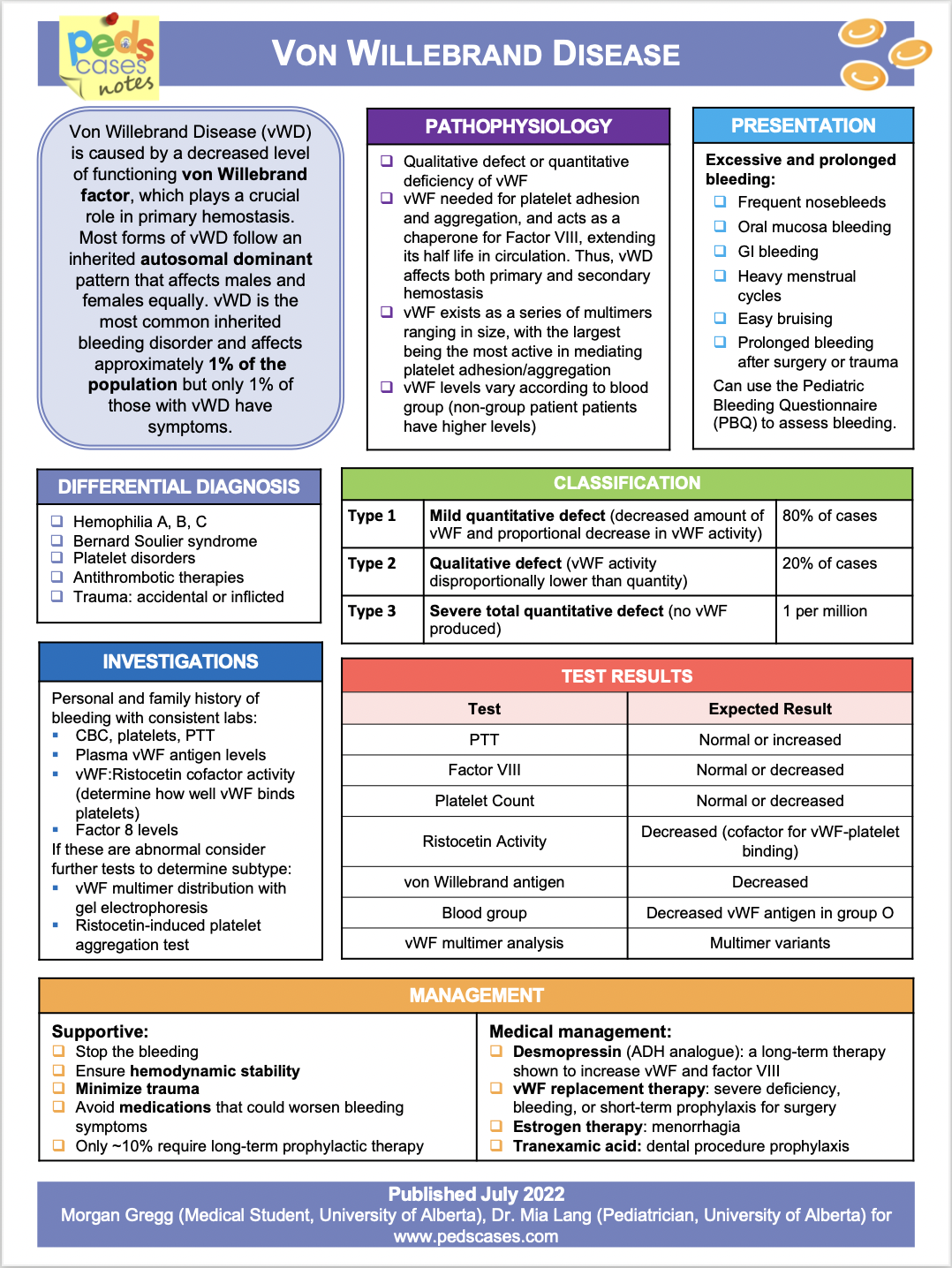
Von Willebrand disease (VWD) is a common inherited bleeding disorder caused by a deficiency or dysfunction of von Willebrand factor (VWF), a protein essential for blood clotting. Understanding the different Von Willebrand Types is crucial for effective diagnosis and management. This blog post delves into the various types of VWD, their characteristics, and the implications for treatment.
Understanding Von Willebrand Disease
Von Willebrand disease is classified into several types based on the quantitative and qualitative defects in VWF. The three main types are Type 1, Type 2, and Type 3. Each type has distinct features that influence the severity of the disease and the appropriate treatment strategies.
Type 1 Von Willebrand Disease
Type 1 VWD is the most common and mildest form of the disease. It is characterized by a partial quantitative deficiency of VWF, meaning there is a reduced amount of VWF in the blood. This type is often inherited in an autosomal dominant manner, which means that if one parent has the condition, there is a 50% chance that their child will inherit it.
Symptoms of Type 1 VWD can vary widely but often include:
- Easy bruising
- Prolonged bleeding from cuts
- Nosebleeds
- Heavy menstrual bleeding in women
- Bleeding from the gums
- Excessive bleeding during surgery or dental procedures
Diagnosis of Type 1 VWD involves blood tests that measure VWF levels and activity. Treatment typically includes desmopressin (DDAVP), a synthetic hormone that stimulates the release of VWF from storage sites, and antifibrinolytic agents like tranexamic acid, which help stabilize blood clots.
Type 2 Von Willebrand Disease
Type 2 VWD is more complex and is further divided into four subtypes: Type 2A, Type 2B, Type 2M, and Type 2N. Each subtype has unique characteristics related to the qualitative defects in VWF.
Type 2A Von Willebrand Disease
Type 2A VWD is characterized by a decrease in the high-molecular-weight multimers of VWF, which are essential for platelet adhesion. This results in reduced platelet aggregation and prolonged bleeding time. Symptoms are similar to Type 1 but can be more severe.
Type 2B Von Willebrand Disease
Type 2B VWD is caused by a gain-of-function mutation that increases the affinity of VWF for platelet glycoprotein Ib. This leads to enhanced platelet aggregation and a decrease in high-molecular-weight multimers. Symptoms include easy bruising, nosebleeds, and heavy menstrual bleeding. Notably, Type 2B VWD can also cause thrombocytopenia, a condition where the platelet count is abnormally low.
Type 2M Von Willebrand Disease
Type 2M VWD is characterized by a decrease in VWF platelet-binding activity without a significant reduction in high-molecular-weight multimers. This type is less common and can present with mild to moderate bleeding symptoms.
Type 2N Von Willebrand Disease
Type 2N VWD, also known as Normandy type, is characterized by a decreased binding affinity of VWF for factor VIII. This results in a reduced half-life of factor VIII, leading to symptoms similar to mild hemophilia A. Diagnosis can be challenging because VWF levels and activity may appear normal.
Treatment for Type 2 VWD often involves the use of VWF concentrates, which provide the necessary VWF and factor VIII. Desmopressin may not be effective for all subtypes, particularly Type 2B and Type 2N.
Type 3 Von Willebrand Disease
Type 3 VWD is the most severe form of the disease, characterized by a near-complete absence of VWF. It is typically inherited in an autosomal recessive manner, meaning both parents must carry the gene for a child to be affected. Symptoms are severe and can include:
- Spontaneous bleeding into joints and muscles
- Prolonged bleeding from minor injuries
- Heavy menstrual bleeding in women
- Frequent nosebleeds
- Excessive bleeding during surgery or dental procedures
Diagnosis of Type 3 VWD is straightforward due to the extremely low or undetectable levels of VWF. Treatment involves the use of VWF concentrates and factor VIII concentrates to manage bleeding episodes and prevent complications.
Diagnosing Von Willebrand Disease
Diagnosing Von Willebrand Types involves a combination of clinical evaluation and laboratory tests. Key diagnostic steps include:
- Medical history and physical examination
- Blood tests to measure VWF antigen levels
- VWF activity assays
- Factor VIII levels
- Ristocetin cofactor activity
- Multimer analysis to determine the presence of high-molecular-weight multimers
Accurate diagnosis is crucial for determining the appropriate treatment and management strategies. Genetic testing may also be recommended to confirm the diagnosis and identify the specific type of VWD.
📝 Note: Genetic testing can provide valuable information for family planning and identifying other family members who may be at risk.
Treatment and Management
The treatment of VWD depends on the type and severity of the disease. Common treatment options include:
Desmopressin (DDAVP)
Desmopressin is a synthetic hormone that stimulates the release of VWF from storage sites. It is effective for Type 1 VWD and some subtypes of Type 2 VWD. Desmopressin can be administered intravenously, subcutaneously, or intranasally.
Antifibrinolytic Agents
Antifibrinolytic agents like tranexamic acid help stabilize blood clots by inhibiting the breakdown of fibrin. They are often used in conjunction with other treatments to manage bleeding episodes.
VWF Concentrates
VWF concentrates provide the necessary VWF and factor VIII for patients with severe forms of VWD, particularly Type 3. These concentrates are derived from plasma or produced recombinantly and are administered intravenously.
Factor VIII Concentrates
Factor VIII concentrates are used in conjunction with VWF concentrates for patients with Type 3 VWD and some subtypes of Type 2 VWD. They help replenish factor VIII levels and improve clotting.
Lifestyle Modifications
Lifestyle modifications can also play a role in managing VWD. These include:
- Avoiding activities that increase the risk of injury
- Using soft toothbrushes and electric razors to minimize bleeding
- Wearing protective gear during sports and physical activities
- Consulting with a healthcare provider before undergoing surgery or dental procedures
Regular follow-ups with a healthcare provider are essential for monitoring the condition and adjusting treatment as needed.
📝 Note: Patients with VWD should carry a medical alert card or wear a medical alert bracelet to inform healthcare providers about their condition in case of an emergency.
Living with Von Willebrand Disease
Living with VWD requires ongoing management and awareness of the condition. Patients can lead active and fulfilling lives with proper treatment and lifestyle modifications. Support groups and educational resources can provide valuable information and emotional support for individuals and families affected by VWD.
Regular communication with healthcare providers is crucial for managing symptoms and preventing complications. Patients should be proactive in seeking medical advice and following recommended treatment plans.
Education and awareness about VWD can help reduce the stigma associated with the condition and promote better understanding and support within the community.
In conclusion, understanding the different Von Willebrand Types is essential for effective diagnosis and management of VWD. Each type has unique characteristics and treatment requirements, and accurate diagnosis is crucial for determining the appropriate care. With proper treatment and lifestyle modifications, individuals with VWD can lead active and fulfilling lives. Ongoing research and advancements in medical technology continue to improve the quality of life for those affected by this condition.
Related Terms:
- von willebrand disease type 3
- von willebrand's type 1
- type 1 von willebrand disorder
- von willebrand's disease type 2
- type 2 von willebrand
- type 2 von willebrand disease